
Typhoon Choi-wan, Typhoon Nolo and Tropical Storm Koguma were all active at the same time on October 6, marking the first time in five years that three tropical systems have existed simultaneously in the western Pacific during October, according to the Japan Weather Association.
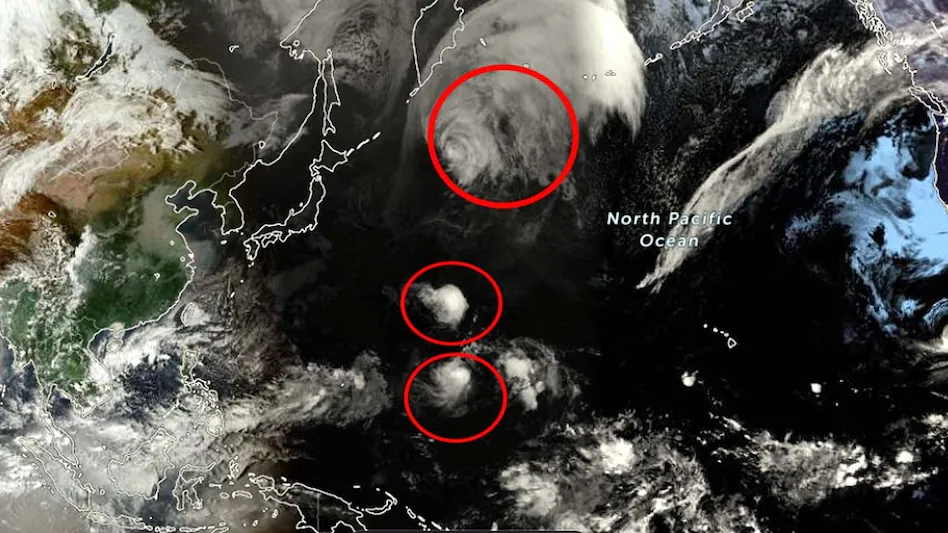
Three Storms, One Pacific
The three systems are spread across a vast area of the Pacific and are at different stages of development.
Typhoon Choi-wan was located off Japan’s main island of Honshu, while Typhoon Nolo and Tropical Storm Koguma were also active farther across the Pacific. The Japan Times reported that the unusual combination was generating high waves around parts of Japan.
The Pacific Disaster Center’s October 6 activity report also listed Nolo, Rachel, Choi-wan and Koguma among the region’s tropical cyclone activity, highlighting how busy the basin has become.
Why Is the Pacific So Active?
One major factor behind the unusual storm activity is the developing El Niño pattern.
The U.S. Climate Prediction Center says the tropical Pacific is experiencing exceptionally warm ocean conditions associated with a strong and persistent El Niño background state. Such conditions can provide additional energy for tropical convection and influence atmospheric circulation across the tropics.
Earlier in the season, NASA also highlighted unusually high Pacific storm activity, noting that the eastern Pacific had already produced significantly more named storms than normal by early September.
Nolo’s Unusual Journey
Typhoon Nolo has been one of the most notable systems of the season. After developing in the Pacific and passing near Hawaii, Nolo later crossed the International Date Line and was reclassified as a typhoon in the western North Pacific.
The system had previously reached major hurricane strength, demonstrating how dramatically tropical systems can evolve as they move across the Pacific.

A Rare October Warning Sign
The simultaneous appearance of three systems does not automatically mean that Japan or other populated areas will be hit by three major storms. Tropical systems can weaken, change direction or remain over open water.
However, the rare October clustering is attracting significant attention from meteorologists because it demonstrates just how active the Pacific has become.
Three systems. One vast ocean. One extraordinary October.